Archive | September, 2011

Basket Breakdown 9/24/2011

25 Sep

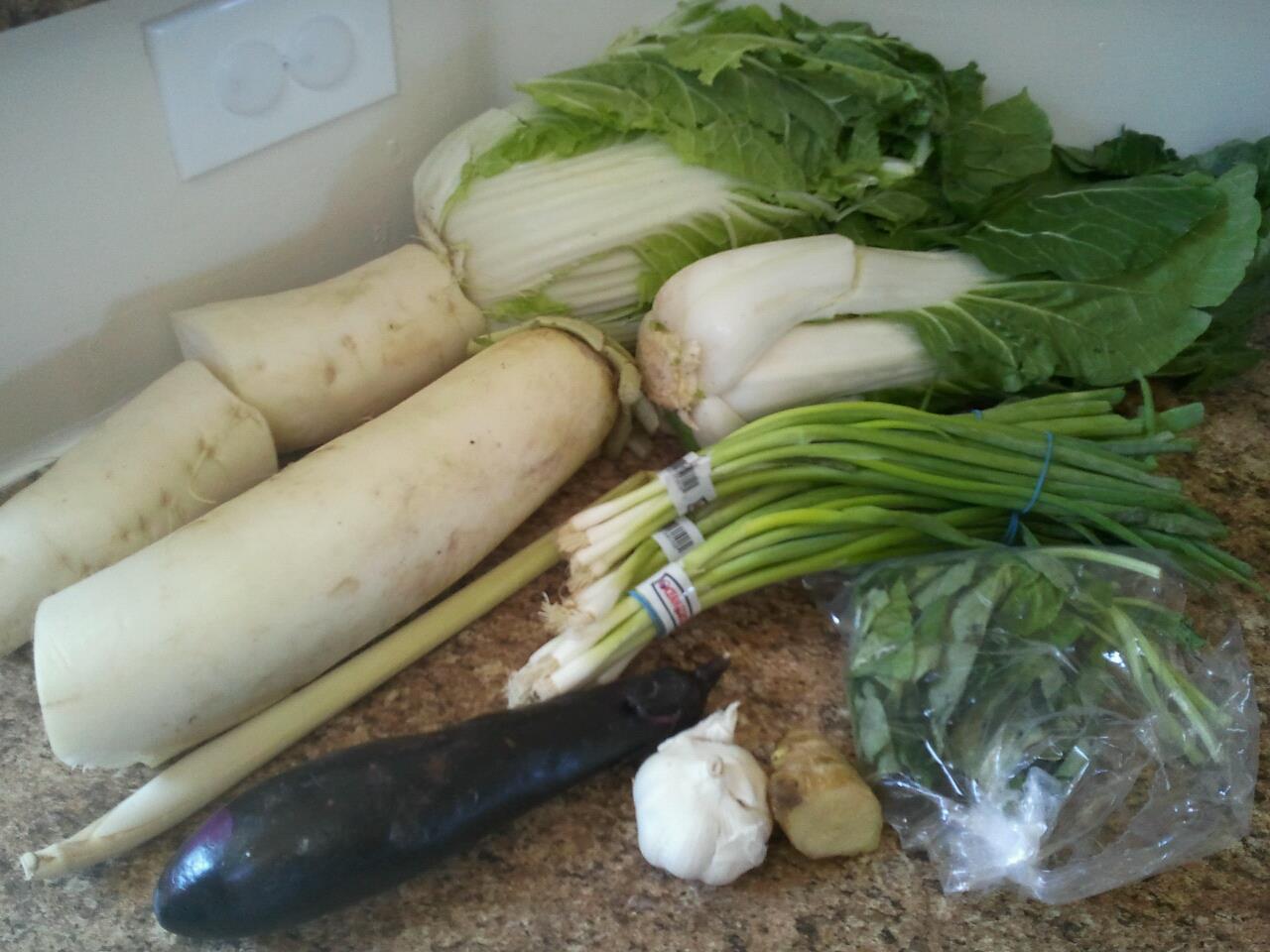
I was impressed with this week’s basket.  Lots of good things.  I got the conventional basket for $15, the Asian themed veggie add-on for $8.50, and 5 loaves of 9 grain bread for $10, plus the $1.50 handling fee, so $35 total.  Here is what we got, first picture shows the conventional basket and 9 grain bread, second picture shows the Asian themed veggie add-on.

Conventional Basket- 9/24/2011

9 grain bread, pineapple, green grapes, bananas, nectarines, Gala apples, apple pears, black plums, iceberg lettuce, green peppers, red peppers, cucumbers, yellow onions, and Roma tomatoes
Asian Themed veggie pack - 9/24/2011

Daikon, Napa cabbage, bok choy, lemongrass, green onion, Japanese eggplant, garlic, ginger root, basil

I was able to get out to Walmart and Fry’s to get some price comparisons, at least for the things I could find.  I did not price the bread, but I know to get bread comparable to this 9 grain would be $3-$4 a loaf, and I’m only paying $2 a loaf. I was able to get prices for everything in the conventional basket, but the veggie pack was a little bit tougher.  The price for the Japanese eggplant is the price for a regular eggplant, I figured they would be about the same.  The lemongrass price was from a tube of lemongrass I found at Walmart, I found a price per pound based on the price and size of the tube.  Daikon, I did not find at either store.

Item

Qty

WM Price

WM Total

Fry’s Price

Fry’s Total

Pineapple (ea)

1.00

$2.98

$2.98

$3.99

$3.99

Bananas (lb)

3.06

$0.56

$1.71

$0.57

$1.74

Gala Apples (lb)

1.67

$1.57

$2.62

$1.29

$2.15

Nectarines (lb)

2.88

$1.03

$2.97

$1.88

$5.41

Apple Pears (ea)

4.00

$1.47

$5.88

$1.49

$5.96

Plums (lb)

2.57

$1.48

$3.80

$1.88

$4.83

Grapes (lb)

2.65

$1.88

$4.98

$1.98

$5.25

Iceberg lettuce (ea)

1.00

$1.14

$1.14

$1.18

$1.18

Cucumbers (ea)

2.00

$0.50

$1.00

$0.59

$1.18

Red peppers (ea)

4.00

$1.78

$7.12

$0.88

$3.52

Green peppers (ea)

3.00

$0.50

$1.50

$0.59

$1.77

Yellow Onion (lb)

2.20

$1.23

$2.70

$0.78

$1.72

Roma tomatoes (lb)

1.58

$0.98

$1.55

$0.90

$1.42

$39.95

$40.13

Item

Qty

WM Price

WM Total

Fry’s Price

Fry’s Total

Green onion (ea)

3.00

$0.56

$1.68

$0.50

$1.50

Garlic

0.12

$3.48

$0.42

$0.59

$0.59

Napa cabbage (lb)

2.21

$0.94

$2.08

$0.99

$2.19

Bok choy (lb)

2.05

$0.94

$1.93

$0.99

$2.03

Japanese eggplant

1.00

$1.98

$1.98

$1.49

$1.49

Basil

0.11

$24.83

$2.73

$0.00

Ginger

0.08

$2.80

$0.22

$0.00

Lemongrass

0.13

$15.12

$1.97

$0.00

Daikon

4.76

$0.00

$0.00

$13.00

$7.80

Again this week, I am impressed with the savings.  I paid $15 for $40 in produce in my conventional basket.  While I wasn’t able to get all the prices for the veggie add-on pack, I’m at $13 before the daikon, so I would estimate that overall it would be $15-$16 total.  Then, with the savings on bread I mentioned, I’m estimating I’m at about 50% savings again, which I am very happy with since produce savings is so difficult.

Note: Prices are from stores in southeastern AZ, prices may vary in other locations.  The weight of food may vary from another basket because of variances in how the ends of produce cases are distributed after everything has been distributed evenly.

Toddler School – Week 2

24 Sep

This week for Toddler School we had a few extras, my friend was watching a 3-year-old and 1-year-old, plus another friend with a 2-year-old decided to join our weekly learning adventures.  Even though it was a little chaotic, we still got through a few activities.

First, we started with coloring a Letter B worksheet that I created.  I also brought some toys that start with the letter B, a bird, a bear, a baby, and a book.

Then, we went outside to do the color match activity with the foam shapes that we did last week.  However, instead of the water beads, I filled the tubs with bird seed.  We chose bird seed because we knew it would be messy, so we wanted to do this outside, but were worried about not getting all the rice picked up and didn’t want the birds to get rice.  Plus, bird seed starts with B, so it fit in with the letter B theme.


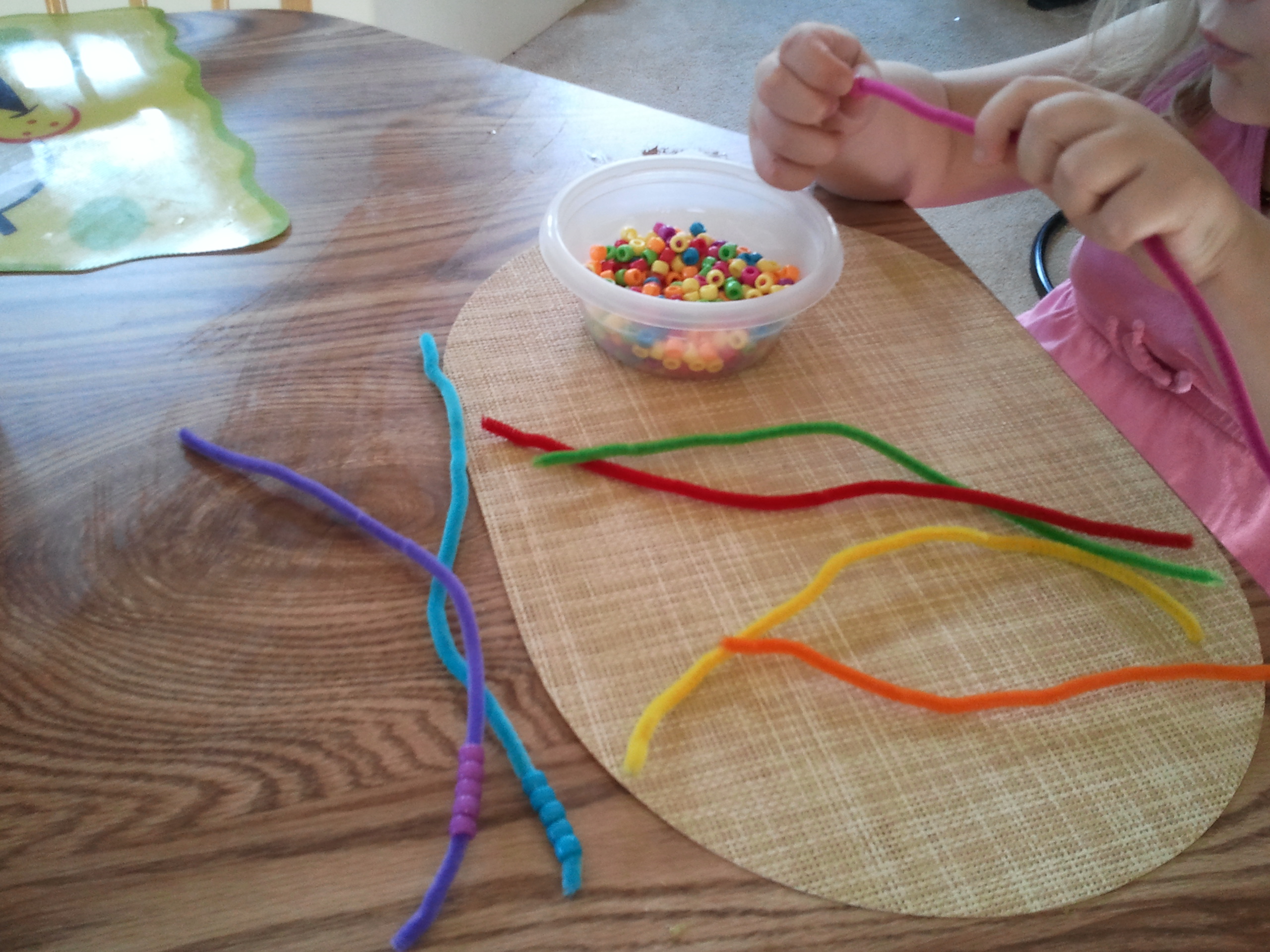
That activity got a little out of control, with bird seed all over, so we moved on to pipe cleaner activities.  First, I got out the beads to work on motor skills by getting the beads on the pipe cleaners.  We tried to do some color matching with this, matching bead and pipe cleaner color, but focused more on just getting the beads on.  That was challenging enough for little hands!  Next, we got out a plastic strainer with holes to make pipe cleaner rainbows.

After that, we just played and watched a movie until it was time to get the big kids.  We have some fun things planned already for next week!

Sesame Chicken

24 Sep

I found this recipe in a healthier eating cookbook a while back and it was an instant hit in our house.  I have made it so often that I have the recipe memorized!  It is a lot lighter than sesame chicken you find at restaurants; this doesn’t have the heavy breading and the chicken is cooked in a small amount of oil, not deep-fried.  I actually prefer this a lot more to restaurant sesame chicken.

Sesame Chicken

1/4 cup unbleached flour or all-purpose flour
4 boneless, skinless chicken breast halves, cut into 2″-4″ strips
1 Tbsp olive oil
1/4 cup reduced-sodium soy sauce
1/4 cup sugar
1/2 tsp dark sesame oil
2 Tbsp sesame seeds, toasted
Veggies of your choice
Cooked rice

Place flour and chicken in a gallon size zipper bag.  Shake to coat chicken in flour.  Heat olive oil in a large non-stick skillet over medium high heat. Add the chicken to the skillet in batches and cook, stirring occasionally, for 3 to 4 minutes, or until white and no longer pink. Transfer to a plate.
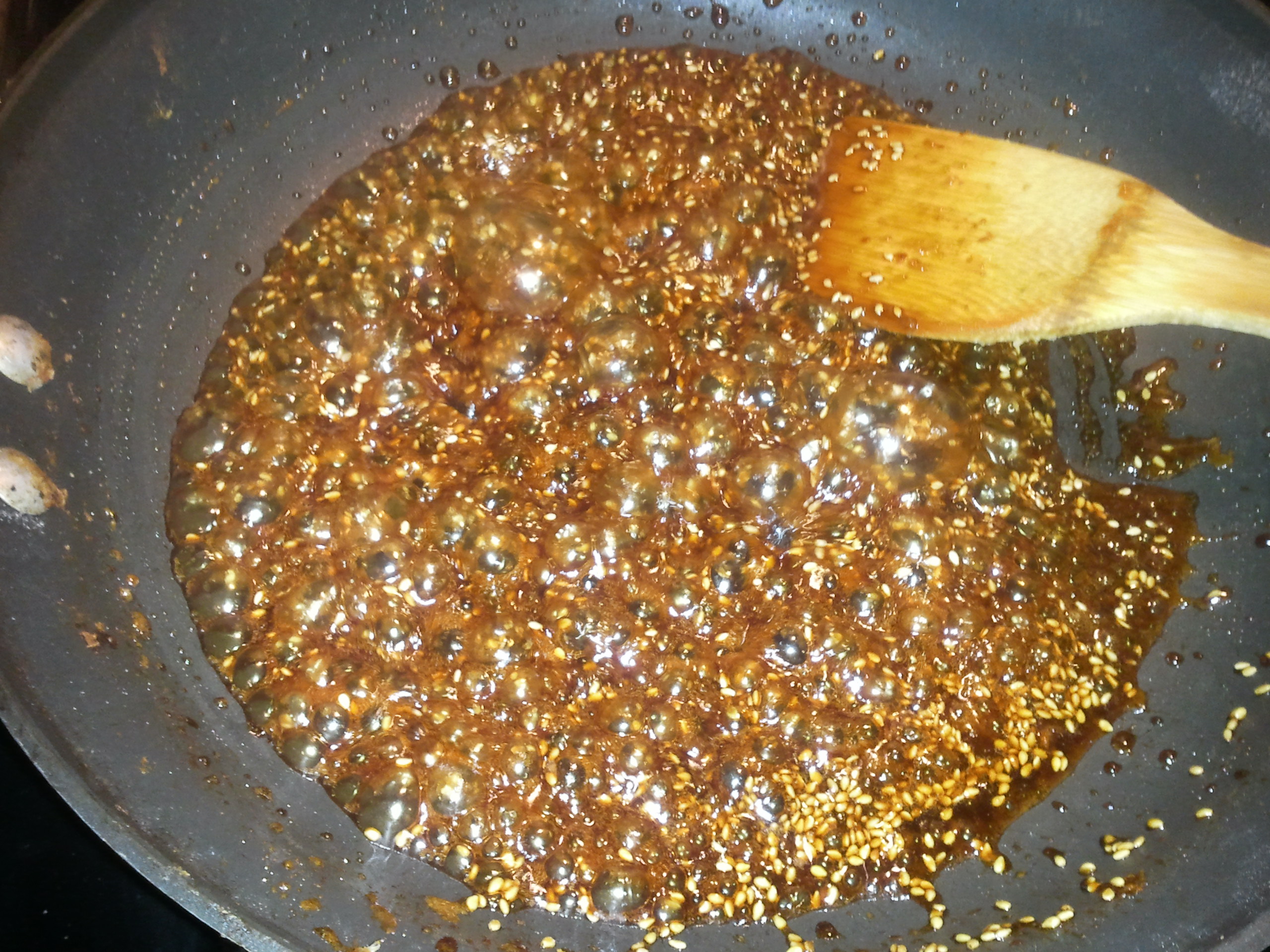
Reduce the heat to medium. Combine the soy sauce and sugar in the skillet. Cook, stirring occasionally, until the sugar dissolves. Stir in the sesame oil and sesame seeds.

Add the chicken and stir to coat.

Add in any chopped veggies you want.  For this batch, I used just broccoli.  Other times I have used different combinations of broccoli, onion, green, yellow, and red peppers, shredded carrots, bean sprouts, snow peas, water chestnuts, and mushrooms.  Cover your skillet and cook until veggies have softened.  I tend to leave the veggies a little crispy still because my husband likes them still crispy.

 Serve over cooked rice.

Note: You can buy toasted sesame seeds, usually with in the section with other Asian grocery items.  If you can’t find them, to toast sesame seeds, place in a dry skillet and toast, shaking the pan, over medium high heat for a minute or so, or until fragrant and lightly browned. Do this first and cook the chicken in the same skillet to pick up more sesame flavor.  Also, if you are using a lot of veggies, you may want to double the ingredients for the sesame coating so there is some for the veggies.

National Child Passenger Safety Week Wrap-up

23 Sep

In case you missed it, this week I posted information about car seat safety for children. Here are links to all of the information I posted.

National Child Passenger Safety Week Sept 18 – 24, 2011: http://wp.me/p1ORT6-3I

Four Steps for Kids: Rear-Facing Car Seats: http://wp.me/p1ORT6-3T

Four Steps for Kids: Forward-Facing Car Seats: http://wp.me/p1ORT6-43

Four Steps for Kids:  Booster Seats: http://wp.me/p1ORT6-4e

Four Steps for Kids: Seat Belts: http://wp.me/p1ORT6-4j

Vehicle crashes continue to be leading cause of death for children in the U.S. Please take the time today to make sure the children in your life have an appropriate car seat for their age, height, and weight, have a car seat that is installed properly and have a car seat that is used properly every time they are in the car. If you aren’t sure, please feel free to ask me any questions you may have, find out if there is a seat check tomorrow, September 24 for National Seat Check Saturday, or set up a visit with a technician in your area (www.seatcheck.org).  Another great resource is the forums at Car-Seat.org.  There are many knowledgeable people there, as well as reviews and measurements of various car seats.  Also, please feel free to pass this information along to anyone that would benefit from reading it.

Thank you for reading!

Four Steps for Kids: Seat Belts

22 Sep

When your child has outgrown their booster seat, they are ready to use the vehicle seat belt. Instead of going just on age, height, or weight, you should go through the 5 step test to make sure they are ready to be in just the vehicle seat belt. The 5 step test is:

1. Does the child sit all the way back against the vehicle seat?
2. Do the child’s knees bend comfortably at the edge of the vehicle seat?
3. Does the belt cross the shoulder between the neck and arm?
4. Is the lap belt as low as possible, touching the thighs?
5. Can the child stay seated like this for the whole trip?

If you can answer yes to all of these questions, then your child is ready to be in that vehicle’s seat belt. You should perform this test in each vehicle, because your child may be ready in some vehicles, but not all.

Just like with booster seats, your child should always use a lap and shoulder belt, not a lap-only belt. You should also make sure your child keeps the shoulder portion of the seat belt in place and not tucked under their arm or behind their back. Without the shoulder portion, there is no protection for the torso, and the child will move forward much more.

Make sure that everyone in your car has their own seat belt. Children should never share a seat belt.

Children should ride in the back seat of the car until at least 13 years old.

Don’t use any products that say they help make the seat belt fit better. They may not make the seat belt fit better at all, such as putting the lap portion up too high on the abdomen instead of down touching the thighs or creating extra space in the shoulder portion making it loose. If the seat belt doesn’t fit properly, then the child should most likely be in a booster seat.

Be a good example for you children. Wear your seat belt every time you are in the car and wear it properly.

Hot Spinach Artichoke Dip

21 Sep

I still had a 1/2 lb of spinach left after making Spanakopita and Spinach Manicotti, so I decided to make another of our favorite spinach dishes, Hot Artichoke Spinach Dip.  It’s really easy to make, and it’s also something I like to make to take to a potluck or party.

Hot Spinach Artichoke Dip

1/2 cup (1 stick) butter or margarine
1 medium onion, chopped
1/2 lb fresh spinach, chopped
1 14 oz can artichoke hearts, chopped
1 8 oz pkg cream cheese
1 8 oz pkg sour cream
1 cup shredded mozzarella cheese, divided
1 cup grated Parmesan cheese divided

Melt butter in a large sauce pan over medium heat. Add onion and cook until soft, about 5 minutes. Stir in spinach, artichokes, cream cheese, sour cream, 3/4 cup mozzarella cheese, and 3/4 cup Parmesan cheese. Stir until well blended and heated through.

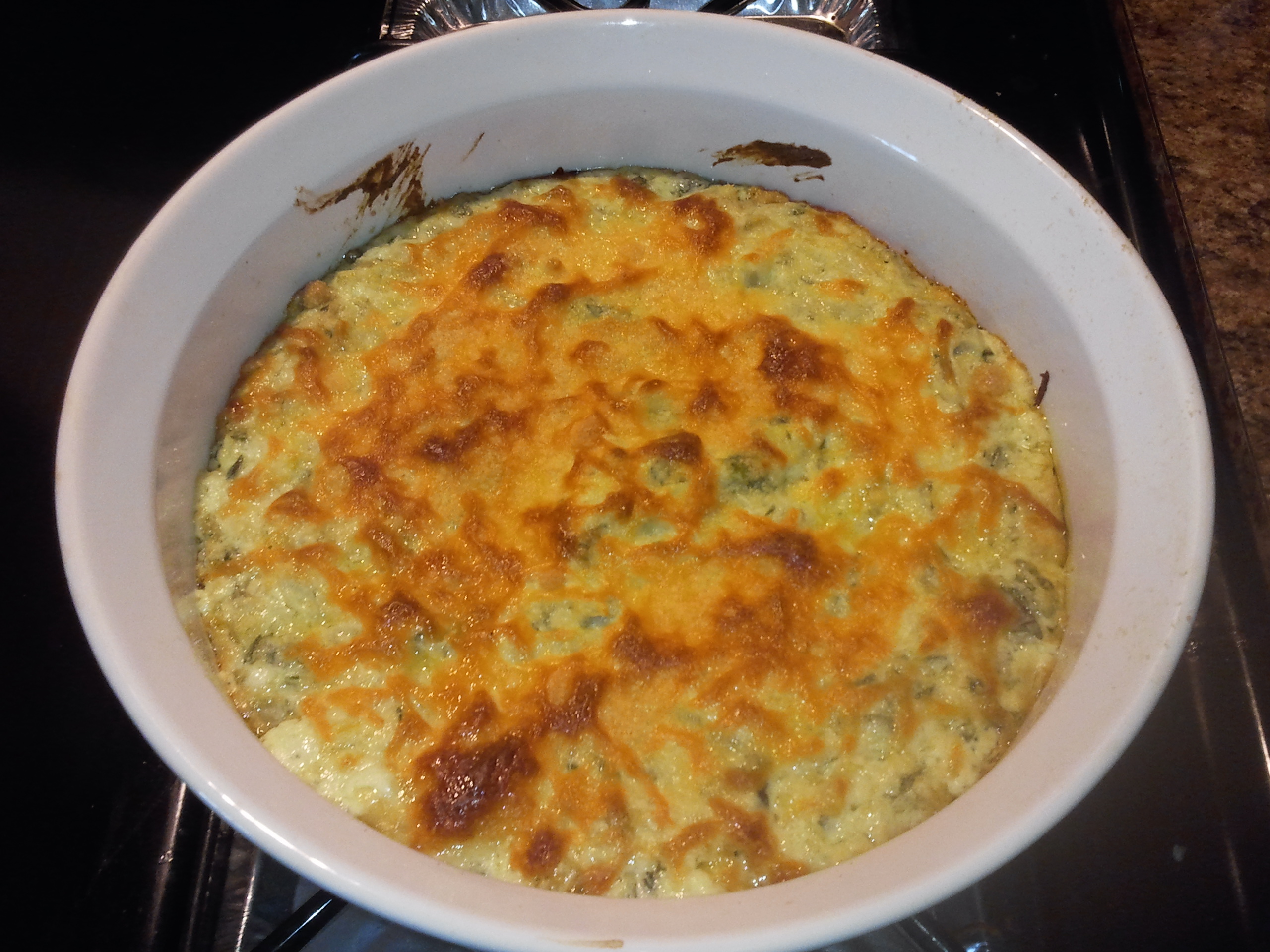
Pour mixture into a casserole dish and top with remaining cheeses. Bake in 350 F oven until cheese starts to brown, about 15-20 minutes.  Serve with your favorite veggies or chips.  We had tortillas chips with this batch.

Four Steps for Kids: Booster Seats

21 Sep

After your child has outgrown their forward-facing seat, they should move to a belt positioning booster seat. A belt positioning booster is either part of a combination seat, a high-back booster seat, or a backless booster seat.

Unlike rear-facing and forward-facing seats that use a harness to keep your child in place, a belt positioning booster seat uses the lap and shoulder seat belts in your vehicle. However, lap and shoulder belts are designed for adults, so a belt positioning booster seat raises your child up to make the seat belt fit properly.

Note how I keep referring to lap and shoulder belts. Booster seats must be used with a lap and shoulder belt and never a lap-only belt. If your car only has lap-only belts, use a forward-facing car safety seat with a harness and higher weight limits. Other options are to see if shoulder belts can be installed in your vehicle, use a travel vest that can be used with lap only belts, or buy a different car with lap and shoulder belts.

Besides what type of seat belt your vehicle has, you must also see how your vehicle’s rear seat is set up, are the seat backs high or low, are there headrests. Combination seat boosters and high-back boosters should be used if your vehicle has low seat backs or no headrests. However, check the instruction manual with your seat, some of these booster seats still require that the vehicle seat have high seat backs or headrests. Backless boosters should only be used if your vehicle has high seat backs or head rests.

How do you know the booster seat fits your child properly? The lap portion of the seat belt should be low, across your child’s upper thighs, not on their abdomen. If the seat belt is on their abdomen, serious abdominal injuries could happen in a vehicle crash. Then, the shoulder portion of the seat belt should cross the middle of the child’s chest and shoulder, not digging into their neck or falling off the shoulder.

A belt positioning booster seat should be used until your child can correctly fit in lap and shoulder seat belts. Typically, this is between the ages 8 – 12 or around the height of 4’9″.  If using a combination seat as a booster or a highback booster, they are outgrown when the child’s shoulder is above the guide for the shoulder portion of the seat belt. If a booster is still needed, find a booster with taller belt guides or switch to a no back booster. However, the best way to know that your child is done with a booster and ready for a vehicle seat belt is not to go by age or height, but to perform the 5 step test:

1. Does the child sit all the way back against the vehicle seat?
2. Do the child’s knees bend comfortably at the edge of the vehicle seat and their feet are flat on the vehicle floor?
3. Does the belt cross the shoulder between the neck and arm?
4. Is the lap belt as low as possible, touching the thighs?
5. Can the child stay seated like this for the whole trip?

If you answered no to any of these questions, you need to keep your child in a booster seat, regardless of what the laws in your state are.  Most states have now passed into law “booster laws” that state children need to remain in a child car seat or booster seat until age 8 or a height of 4’9″.  If your state doesn’t have this law or even if they do have this law, it is highly recommended that you follow best practice and keep them in a booster seat until they pass the 5 step test.

You may ask, but won’t my child be made fun of by his/her friends if still in a “baby seat”? Well, first off, the minimum age and weight for most boosters is 40 pounds, which most kids don’t reach until between ages 3 and 4. Boosters are definitely not “baby seats”, they are for big kids. Second, by not using a booster, the injuries sustained in a vehicle crash would be a lot worse than some teasing by friends.  Plus, it is now the law in many states to continue using a booster until age 8 or 4’9″.

Don’t be in a rush to stop using a booster seat.  This report talks about the importance of using a booster and the injuries that may be received if a booster is not used.

One last note, when a booster is not occupied, still buckle it in using the seat belt. This will keep the booster from moving around in the back seat or from becoming a projectile in a crash. Some booster seats are now available with LATCH clips to keep the booster in place when not occupied so you don’t have to remember to buckle it in each time.

Basket Breakdown 9/17/2011 – Update

20 Sep

I got a food scale over the weekend, and have now finally made it to 3 local grocery stores that sell produce to compare prices.  The 3 stores I chose to compare are Wal-Mart, Safeway, and Fry’s.  We also have a commissary and Food City here, but I figured that 3 stores was enough to give a general idea.  I was able to find prices for everything except for figs, which I could not find at any stores here.  They weighed half a pound, so I estimated them to be about $5/lb, which would be $2.50 total for the amount I got.  If anyone has a better price for figs, let me know.  Here is the breakdown.

Item

Qty

WM Price

WM Total

SW Price

SW Total

Fry’s Price

Fry’s Total

Broccoli (lb)

2.81

$1.28

$3.60

$1.49

$4.19

$0.96

$2.70

Yellow onion (lb)

2.13

$1.16

$2.47

$0.96

$2.04

$0.78

$1.66

Yams (lb)

2.41

$0.98

$2.36

$1.49

$3.59

$1.29

$3.11

Cucumbers (ea)

2.00

$0.64

$1.28

$0.99

$1.98

$0.59

$1.18

Avocado (ea)

3.00

$0.98

$2.94

$0.99

$2.97

$1.25

$3.75

Bananas (lb)

2.20

$0.56

$1.23

$0.57

$1.25

$0.69

$1.52

Figs (lb)

0.50

$5.00

$2.50

$5.00

$2.50

$5.00

$2.50

Grapes (lb)

2.12

$1.88

$3.99

$2.49

$5.28

$1.98

$4.20

Bartlett Pears (lb)

1.71

$1.17

$2.00

$1.49

$2.55

$1.00

$1.71

Gala Apples (lb)

2.14

$1.57

$3.36

$1.69

$3.62

$1.79

$3.83

Plums (lb)

2.00

$1.25

$2.50

$2.49

$4.98

$1.98

$3.96

Apple Pears (ea)

2.00

$1.47

$2.94

$1.00

$2.00

$1.49

$2.98

$31.17

$36.95

$33.09

The average of the 3 totals is $33.74.  Sales tax on food in AZ is 1.75%, so after tax my total at the store would be $34.33.  I paid $15 plus $1.50 handling fee, so $16.50 altogether.  That makes my savings $17.83, or 52%.  I am very happy with that number!  This is the first time that I have actually gotten all the numbers, so now I am curious to see how it will compare throughout the year.

Note: Prices are from stores in southeastern AZ, prices may vary in other locations.  Also, please know that I volunteered this week and did get 1 extra item, which was 2 apples.  The weight of food may vary from another basket because of volunteering and because of variances in how the ends of produce cases are distributed after everything has been distributed evenly.

Four Steps for Kids: Forward-Facing Car Seats

20 Sep

After your child has outgrown their rear-facing seat, they should move to a forward-facing seat with a 5 point harness. There are 5 types of car seats that can be used forward-facing (taken from Car Safety Seats: Information for Families 2011)

  1. Convertible seats—Seats that “convert” from rear-facing to forward-facing seats. These include  some 3-in-1 seats.
  2. Forward-facing only—These seats can be used forward-facing with a harness for children who weigh up to 40 to 80 pounds (depending on the model).
  3. Combination seat with harness—These seats can be used forward-facing with a harness for children who weigh up to 40 to 85 pounds (depending on the model) or without the harness as a booster (up to 80–100 pounds).
  4. Built-in seats—Some vehicles come with forward-facing seats built in. Weight and height limits vary. Read your vehicle owner’s manual or contact the manufacturer for details about how to use these seats.
  5. Travel vests—These can be worn by children between 20 and 168 pounds and can be an alternative to traditional forward-facing seats. They are useful for when a vehicle has lap-only seat belts in the rear or for children whose weight has exceeded that allowed by car safety seats. These vests may require use of a top tether.

The child should remain in a forward-facing seat until they reach the limits of their car seat. These limits are either the maximum forward-facing weight or height limit or when their shoulders are even with the top harness position or when the tips of their ears are even with the top of the seat shell, whichever comes first. In most cases, the weight limit will be 40, 65, or 85 pounds.

Another important factor is age. A child should be at least 4 years old before moving out of a 5 point harness and into a booster, if not 5 or 6 years old, depending on their maturity level. Once a child can remain properly positioned in a belt positioning booster for the entire ride, then it is time to make the switch. If needed, higher height and weight limit seats should be used until the child is mature enough for a belt positioning booster.

When installing a forward-facing seat, here are some things to consider:

  • Make sure the harness is positioned at or above your child’s shoulders.
  • If you are using a convertible seat for forward-facing, make sure the vehicle belt or LATCH strap is routed through the correct belt path of the seat.
  • Always attach the top tether strap on the car seat to an appropriate anchor point in your vehicle. To find these anchor points, read through your vehicle’s owner’s manual. Tethers give important extra protection by keeping the car seat and the child’s head from moving too far forward in a crash or sudden stop.

Pipe Cleaners and Bead Counting

19 Sep

This morning, my oldest was pushing all my buttons, so I remembered that I finally got beads last week at Target (400 count package).  So, I put those in a bowl, got out the pipe cleaners and had her start on an activity.  We picked out a pipe cleaner to match each color bead.  For the first 3, I had her put 5 matching color beads on the pipe cleaner.  For the other 4, I had her put 10 matching color beads on each pipe cleaner.  She finished it pretty quick, but it had the effect of calming her down and keeping her busy for about 15 minutes.

For the next time we do this activity, I will be adding some number tags to each pipe cleaner so she has to recognize that number and then add that number of beads to the pipe cleaner.  Then, once she gets the beads on, we can use them to do math activities, like addition and subtraction.