Archive | Children RSS feed for this section

Fruit Butterfly Snack

11 Mar

My older daughter just got her new Highlights magazine in the mail.  Ah, the memories of Highlights magazines from when I was a kid.  I loved the picture search puzzles the most!  Anyway, the You’re the Chef! section of the April 2013 magazine had Butterfly snacks.  They had a few variations with vegetables (lettuce, carrots, grape tomatoes), cheese (sticks and slices), and bread, but we chose to do the fruit one, using a banana, apple slices, yogurt, and raisins.  Here is how it turned out:

Fruit Butterfly Snack


It’s easy!  Place a banana in the middle of your plate, then cut an apple into slices to make the wings.  Spread some yogurt on the apple slices, then put raisins on top of the yogurt.  You could also use some pretzel sticks for the antennae, but we didn’t have pretzel sticks, so we skipped it.  You could use a variety of fruits here, first that comes to mind is orange slices in place of the apple slices.  You could use mint leaves for the antennae as well.

Time to Change Your Batteries!

11 Mar

MAR-2013-Change-Your-Clocks-Email


I’m a day late on getting this posted, but the weekend got away from me!  Hopefully, you all changed your clocks yesterday, unless you live in AZ like me.  I hope that you also changed your smoke alarm batteries as well.

Here is a message from Safe Kids Worldwide:

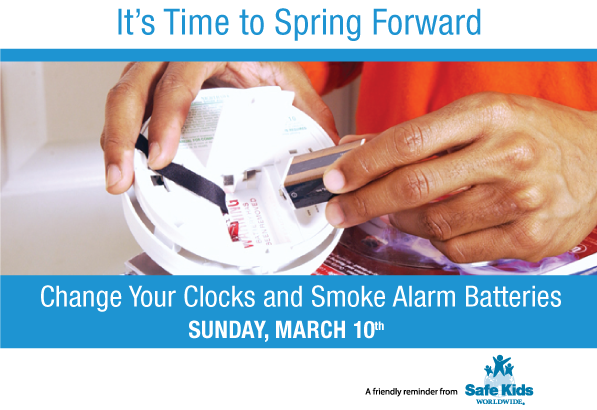
When it’s time to “spring forward” and change the clocks on Sunday, March 10, make sure to change the batteries in all of your smoke alarms. If batteries were recently changed, it’s still very important to conduct your monthly test of your smoke alarms. It could save a life!

Did you know that having a working smoke alarm reduces a person’s chance of dying in a fire by half?

For the best protection, install smoke alarms on every level of your home, outside every sleeping area, and in every bedroom. Smoke alarms should be mounted high on walls or ceilings and tested monthly.

It’s important to replace smoke alarm batteries at least once a year, unless they’re 10-year lithium batteries. Even if your smoke alarms are hardwired, replace the batteries in case of a chirping sound or a power outage.

Reminder: Smoke alarms do not last forever. The maximum life span is 8-10 years. After that time, the entire unit should be replaced. If the unit does not respond properly when tested, it should be replaced immediately.

Here is a link to more Fire Safety Resources: http://www.safekids.org/safety-basics/safety-resources-by-risk-area/fire-burn-and-scalds/

Now that my kids are older and do regular fire drills at school, we plan to start doing them at home as well.  We will designate a meeting spot outside the house and talk about different ways to get out of the house.

Fun Lunch Containers

24 Feb

Just before the start of the school year this fall, I came across a deal for Bright Bins on Mamabargains for $8 each.  Since the school that my children attend does not have hot lunch and I have to make a lunch everyday for my older daughter, I thought it would be nice to have a reusable container to use for their lunches.  Here is one of her first lunches that I made in the Bright Bin:

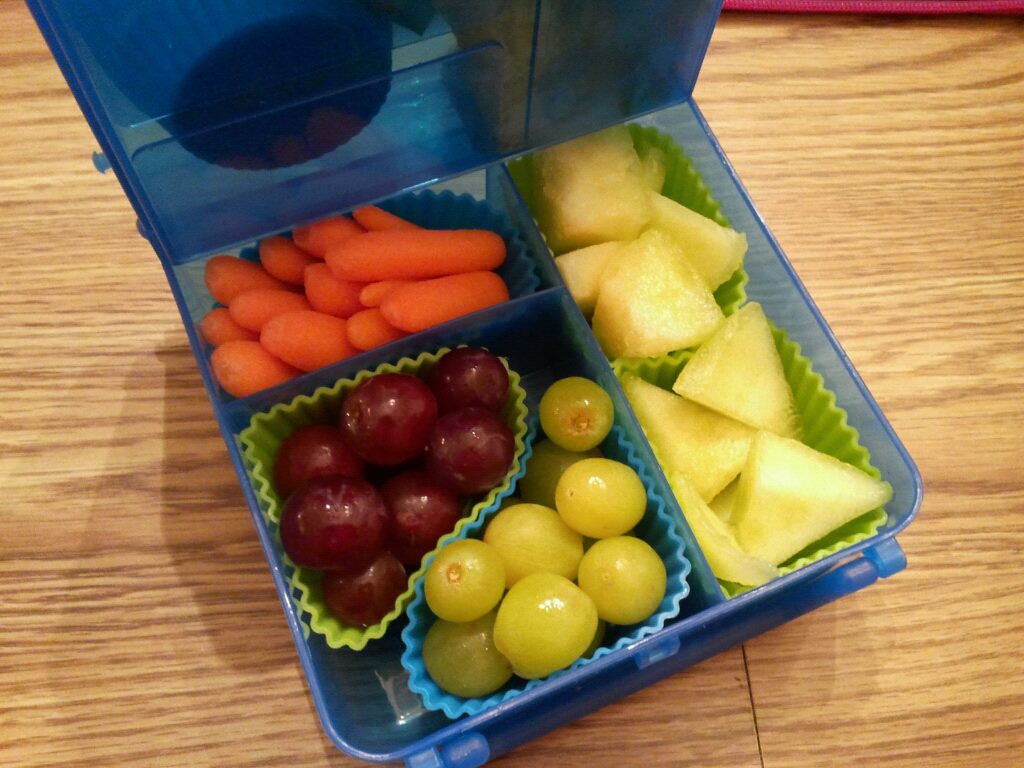
Bottom part of Bright Bin packed with baby carrots, grapes, and honeydew

Bottom part of Bright Bin packed with baby carrots, grapes, and honeydew

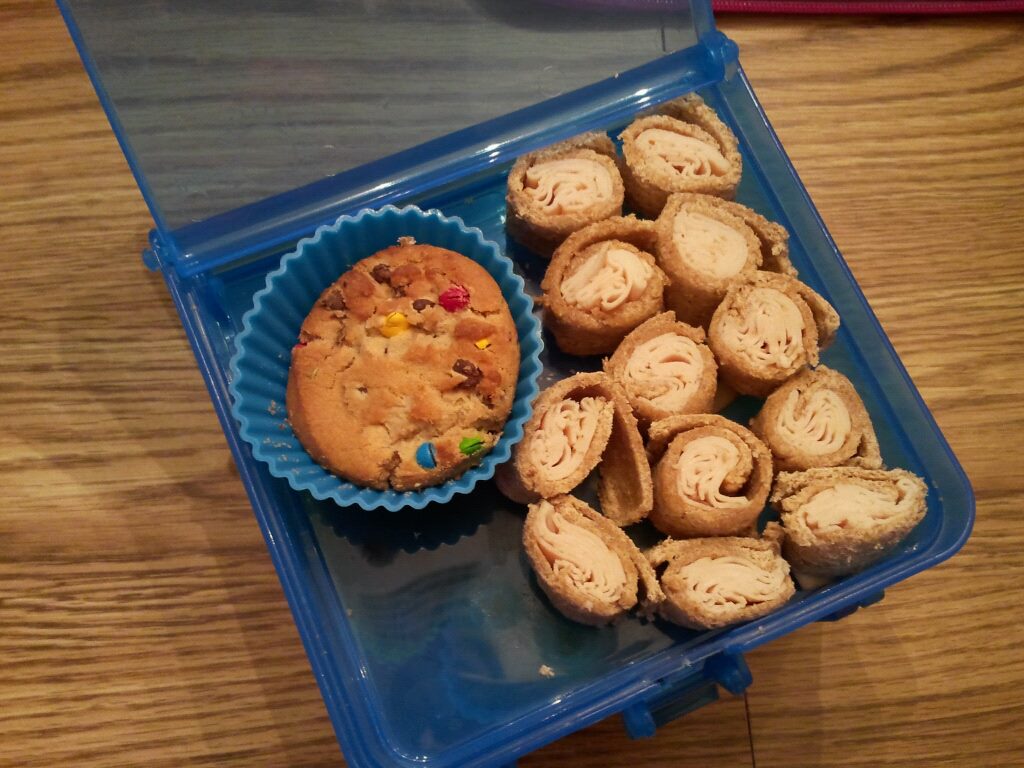
Top half of Bright Bin packed with a cookie and turkey and bread "sushi"

Top half of Bright Bin packed with a cookie and turkey and bread “sushi”

Bright Bin packed in insulated lunch box with Thermos FUNtainer of water

Bright Bin packed in insulated lunch box with Thermos FUNtainer of water

I occasionally used the silicone muffin cups shown to help divide things up more.  The Bright Bin lasted about half the year, when the top latch broke.  It’s still usable if you use a rubber band around the whole bin to keep it together.  I started using the second one I purchased instead.  However, the top part is pretty shallow, so if my daughter wants something besides a sandwich for her lunch, it’s not ideal.

So, a friend of mine had gotten some other lunch containers, and I was admiring them at the park one day when we had a playdate and picnic.  She had sistema Lunch Cube To Go for her girls to pack lunches in.  I looked them up online a few times, but didn’t ever get around to ordering.  Then, I noticed that the Safeway in town had a few of the containers, and decided to try a Salad To Go container.  It was exactly what I was looking for so that my daughter could take leftovers for her lunch (she doesn’t mind cold tortellini or lasagna!).  The Salad To Go containers have a tray that fits inside, making a lower section and upper, divided section, along with a fork and knife, plus a small round container.  They are BPA free, microwave safe, freezer safe, and top rack dishwasher safe.

Salad To Go container pieces

Salad To Go container pieces

But, I don’t pack salads in it for her, I pack a full lunch like this:

Salad To Go container packed with cheese tortellini in the lower portion, tangerine and pita chips in the upper portion, and hummus in the small round conatiner

Salad To Go container packed with cheese tortellini in the lower portion, tangerine and pita chips in the upper portion, and hummus in the small round container

Container put back together

Container put back together

Salad To Go in lunch box with Thermos FUNtainer and ice pack

Salad To Go in insulated lunch box with Thermos FUNtainer and ice pack.  I kept the fork and knife out so they wouldn’t get messy inside with the tortellini

So far, it has gone really well with this one.  Both my 6-year-old and 4-year-old can undo and redo the latches, and it has held up well going back and forth to school.

I was just at Safeway again, and they had a whole display of sistema To Go containers, Soup Mug To Go ($6.99), Salad To Go ($7.99), Breakfast To Go ($6.99), and Lunch Cube To Go ($5.99)!

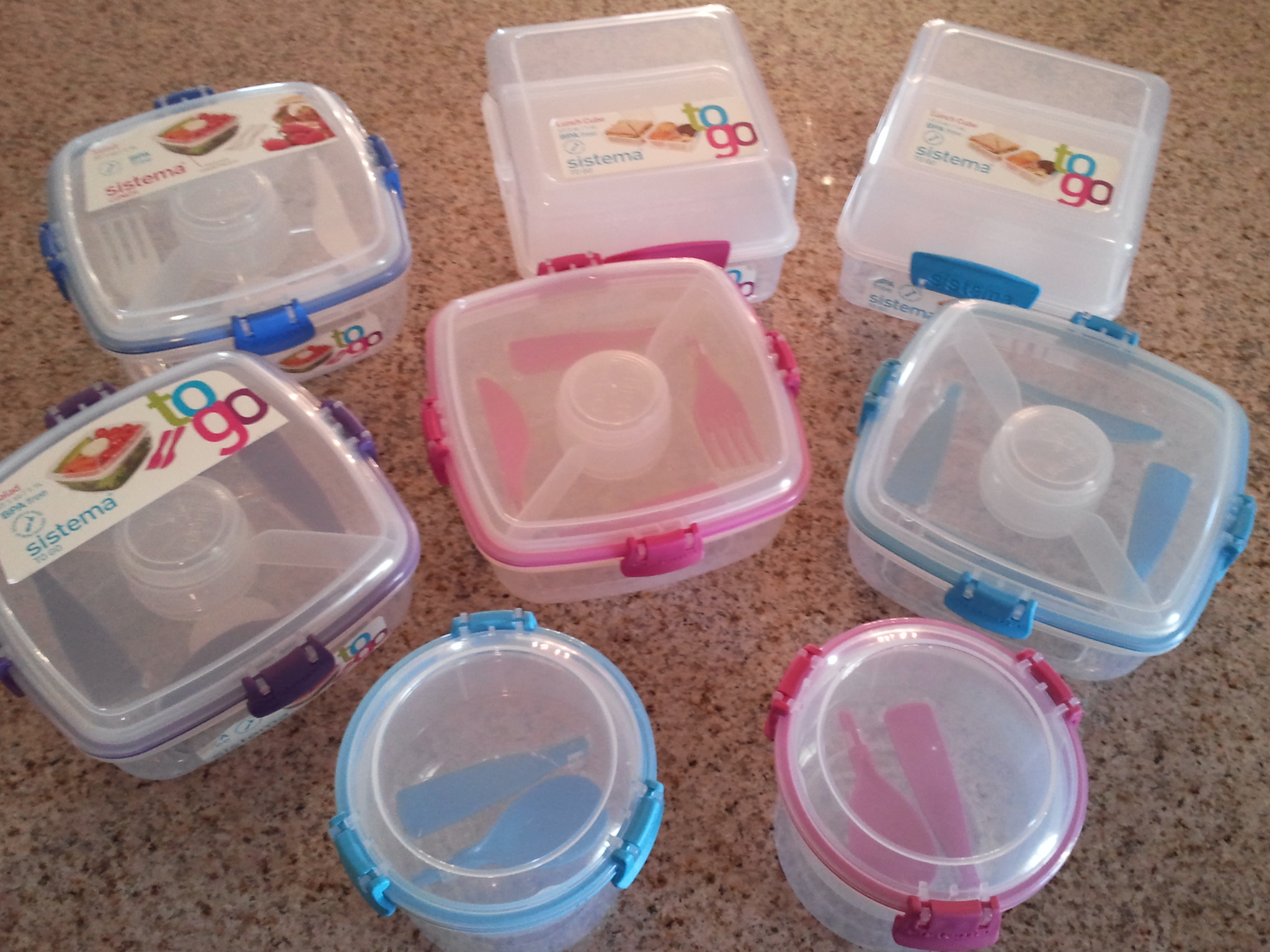
sistema Display at SafewaySo, of course, I had to expand our collection:

sistema Containers

I now have a Salad To Go for each family member, Lunch Cube To Go and Breakfast To Go for each of my girls. My oldest loves pink, so her latches are all pink, my youngest loves blue, so her latches are blue.  My favorite color is purple, so mine is the purple one, and I got a blue one for my husband.

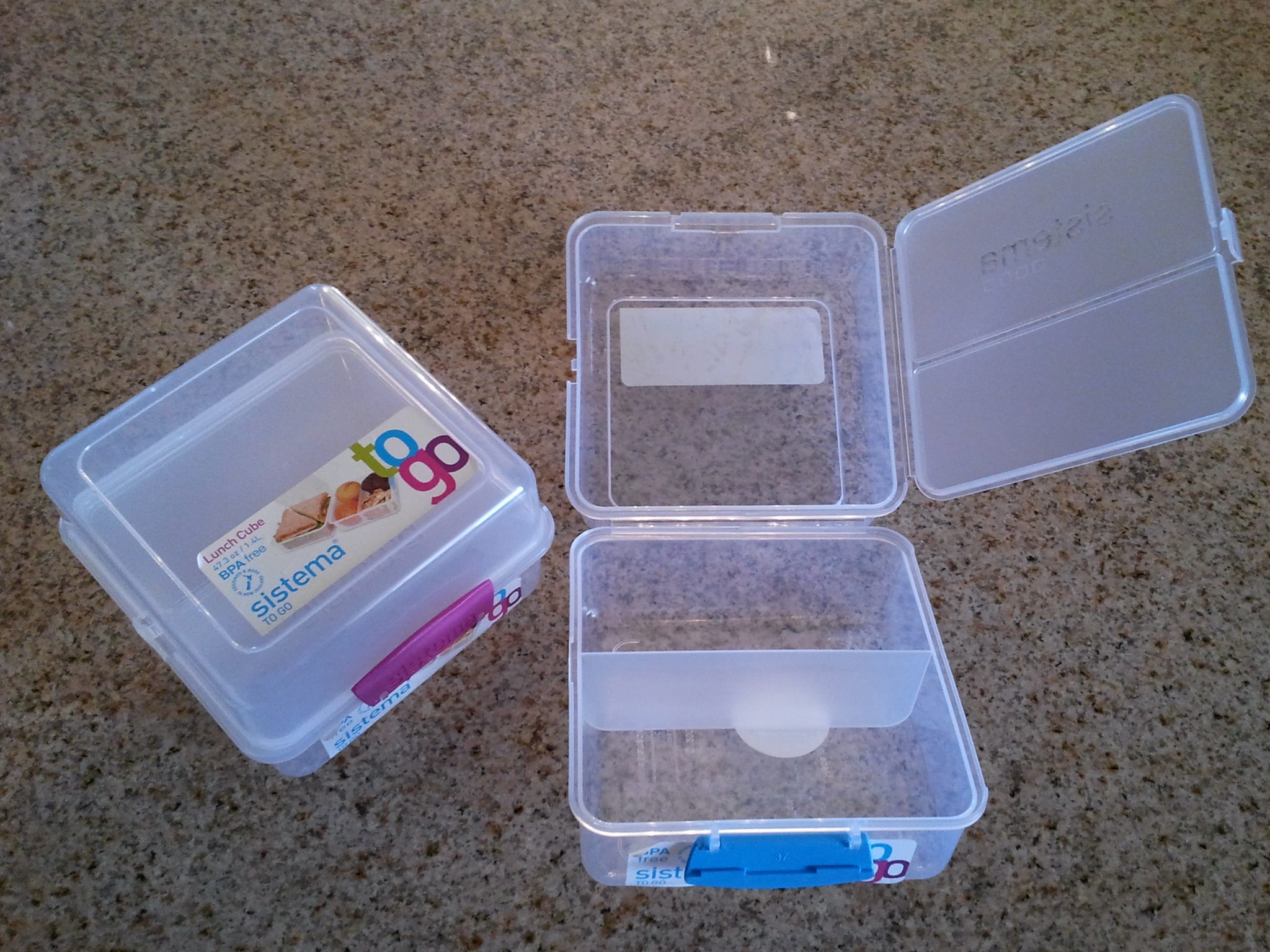
I got the Lunch Cube To Go to have another option for lunches.  It has a large section on top and a divided section on bottom, with a latched cover in between the two sections:

How the Lunch Cube To Go looks opened

How the Lunch Cube To Go looks opened

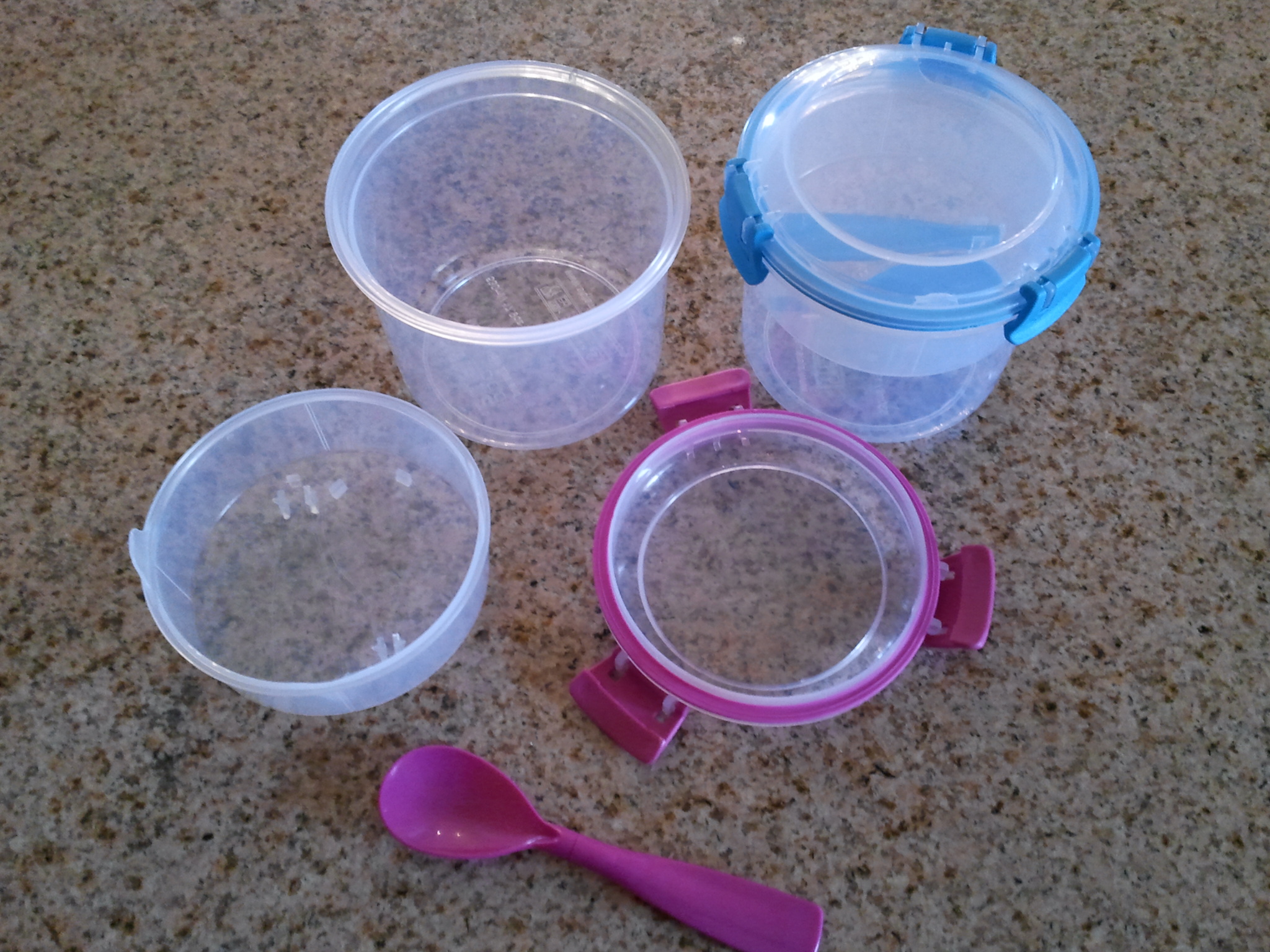
The Breakfast To Go containers I got for the days that we are running late and have to have breakfast in the car or when we need to pack a breakfast to take along somewhere.  It is similar to the Salad To Go; it has a larger container with a top part that fits in and has a spoon that clips into that top part.  Here is a picture of all the pieces:

Breakfast To Go taken apart to show different sections and the spoon

Breakfast To Go taken apart to show different sections and the spoon

The kids love the new containers, and hopefully we’ll get a lot of good use out of them.


Disclaimer: I did not receive any product from Bright Bins or sistema, I purchased all of these myself and wanted to provide information on how I use them and how they work for us.

A Kitchen-y Christmas: Kid Version

3 Feb

My daughters both love to cook with me.  Any time in the kitchen, they want to help any way they can.  Naturally, because of her love for cooking, my older daughter wanted an Easy Bake Oven for Christmas.  I had an Easy Bake Oven when I was a kid and I thought it was really cool.  Until I realized it’s just a light bulb in a plastic oven, and it makes the tiniest, almost tasteless desserts.  So, we talked it over, and we decided that it might be more fun to ask for her own set of baking supplies.  I figure, I would have to supervise her using the Easy Bake Oven anyway, and if we are putting the time and effort in, we might as well make a real dessert so she can learn her way around the kitchen.

So, I headed out to our local Target store and came up with all this:

A Kitchen-y Christmas: Kid Version

Our Target has this cool line of bright-colored, collapsible prep items called squish.  They are reasonably priced, and great for minimal storage since they collapse.  She loves the colors!  I got the 5 quart mixing bowl, the measuring cup set, and the measuring spoon set.  We may expend to some of the other size mixing bowls and the colanders at some point.

The Caterpillar Spatula and Giraffe Wisk are both made by NordicWare.  They also make an alligator rolling pin, but I decided to skip the rolling pin for now.  They are the perfect size for little hands, and love that they are cute with the animal shaped handles.

Then, I got a Wilton 24 cup mini muffin pan and a Kitchen Essentials from Calphalon Bar Pan.  This was to keep with the Easy Bake Oven theme, making things on a smaller scale and individualized.  And, of course, since she was getting a bar pan, I got her a red OXO Good Grips Brownie Sptaula.

A friend of mine is working on an apron for her as well.

She loves all of it!  We made mini blueberry muffins last month, and hopefully, making some brownies today to try out the bar pan and spatula.  In the end, it did cost me a little more for all this than an Easy Bake Oven would have cost, but these items we will be able to use for a lot longer than an Easy Bake Oven, or so I hope!  Hoping to get lots of baking done with these items over the years while she grows up!

Scholastic Book Fair: Story Laboratory

1 Feb

My last 2 weeks have been consumed with planning and running a Scholastic Book Fair at my children’s school.  I was co-chair with another mom at the school, so we had to come up with a plan for the room, do some decorating, and run the book fair with some help from more parent volunteers at the school.

I love book fairs, I have for a long time.  But, I never realized how much work goes into them!  Scholastic has a great system.  They deliver cases full of books that you open and push up cardboard displays from behind.  Then, they send more books in boxes for you to display on tables, as well as an assortment of pencils, pens, erasers, bookmarks, posters, and other items.  This was the part that took the longest, putting out all the extra items.  It took about 4 hours for the 2 of us to get it all set up, plus the 2 hours I spent in the morning decorating the window and door.

Here are some pictures of it all!

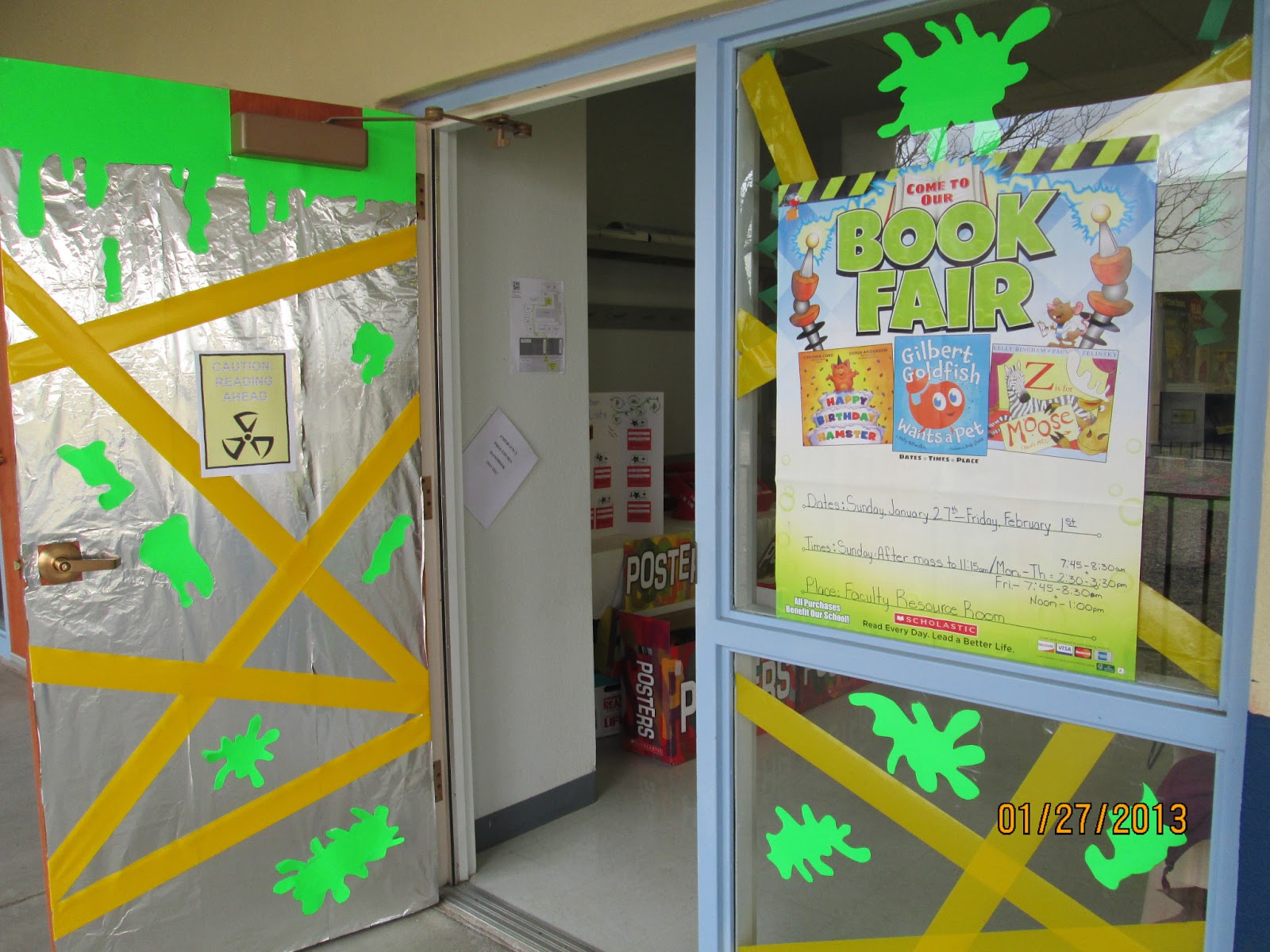
First, the entrance to the book fair.  The spring theme was Story Laboratory, so we wanted to create a science lab feel for the room.  I used aluminum foil to cover the door.  I didn’t quite use a box of 75 sq ft, which cost me $2.88.  Then, I had yellow caution tape from car seat check events that I do, so I put that on both the door and the window.  Next, I got 2 neon green poster boards for $.77 each, $1.54 total, to create the green slime.  The sign on the door I created in PowerPoint (I couldn’t access our chairperson’s toolkit yet to get to the signs Scholastic has to download and print) and says “CAUTION: READING AHEAD”.  Add a roll of packing tape for $2.50 to tape it all up, and decorations cost me $7 total!

Entrance to the book fair

Photo courtesy of Sister Carol, school principal

Next, pictures from as you walk in the door and around the room to see all the cases and tables of books and other goodies.  There was a lot!  Oh, and the board with Teacher Wish Lists I have a separate picture of since we didn’t have it out on the table yet, it was on the table with the posters on the floor in front of it.

Teacher Wish List Board

Posters and school supplies Special Value and Preschool books Cases and lots of tables of books 775679_10151206200171437_1946415148_o

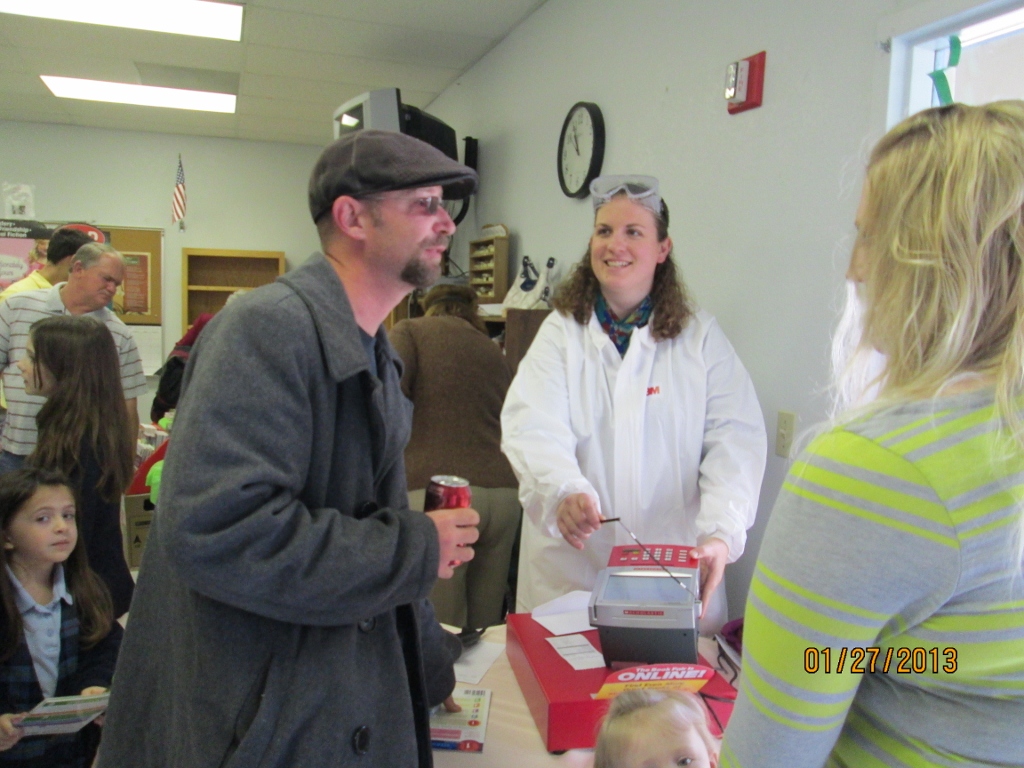
Scholastic also sends cash registers for the event, and we could accept cash, check, or credit/debit cards.  Here I am in a lab coat and goggles ringing up a customer on our first day during a school open house.  The lab coats I bought were 3M disposable lab coats in size 2X that were $4.07 each on Amazon, and the goggles were Hot Max safety goggles, which at the time were $2.90 each on Amazon, but it looks like the price has gone up.

Me helping a customer at the register

Photo courtesy of Sister Carol, school principal

The register also tracks all sales, so you can run a report each day of sales and merchandise sold, so you can make sure your drawer is correct and order more items that are selling well.  At the end, you can run a cumulative report to tell you total sales, and also breakdown cash, check, and credit sales.  This makes it really easy to submit the final reports and payment to Scholastic!

So, at the end of the 2 weeks, I’m exhausted from all the work, but the kids’ faces as they came through the book was definitely worth it! I worked the book fair almost all week before and after school, and as I walked in each day, I heard from about every kid I passed, “Are you opening the book fair now?  I have something I want to get!”.  ANYTHING to encourage reading!  Although, being there every day, we did more than our part to monetarily support the book fair!  I think I bought something every day.  I’m already looking forward to next year, and now that I know what to expect, I’m hoping we can make it even better!

Edited on February 3 to add a picture of the Teacher Wish List board.

National Child Passenger Safety Week 2012 Wrap Up

22 Sep

In case you missed it, this week I posted information about car seat safety for children. Here are links to all of the information I posted.

National Child Passenger Safety Week 2012

The Right Seat: Rear-Facing

The Right Seat: Forward-Facing

The Right Seat:  Booster Seats

The Right Seat: Seat Belts

Vehicle crashes continue to be leading cause of death for children ages 1 – 12 in the U.S. Please take the time today to make sure the children in your life have an appropriate car seat for their age, height, and weight, have a car seat that is installed properly and have a car seat that is used properly every time they are in the car. If you aren’t sure, please feel free to ask me any questions you may have or find out if there is a Car Seat Inspection location near you to make an appointment with a certified technician.  If you aren’t able to make it to  a technician, here is a checklist that Safe Kids put together for you to use when checking your child’s car seat.  Another great resource is the forums at Car-Seat.org.  There are many knowledgeable people there, as well as reviews and measurements of various car seats.  Also, please feel free to pass this information along to anyone that would benefit from reading it.

Thank you for reading!

The Right Seat: Seat Belts

21 Sep


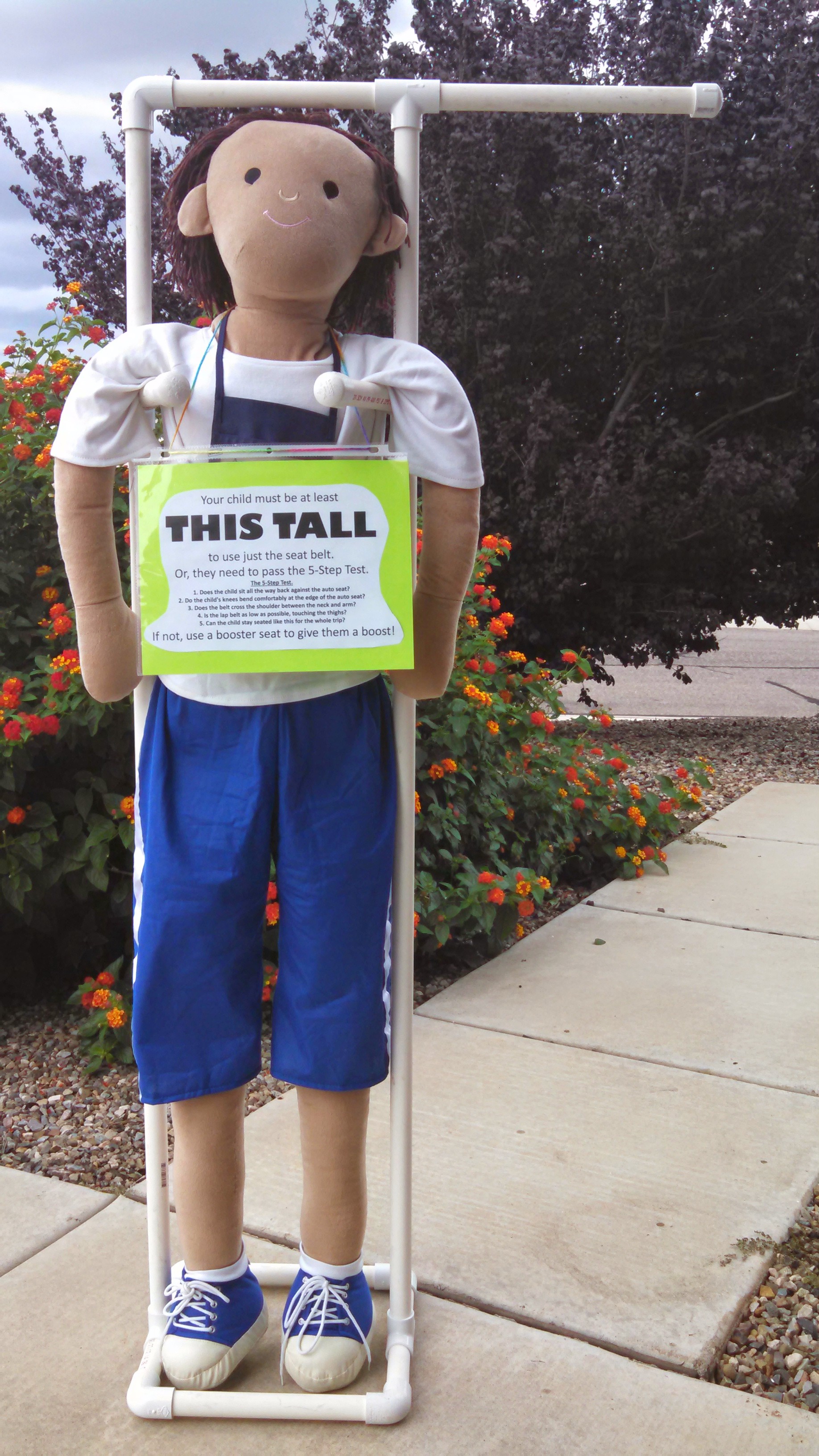
When your child has outgrown their booster seat, they are ready to use the vehicle seat belt. Instead of going just on age, height, or weight, you should go through the 5 step test to make sure they are ready to be in just the vehicle seat belt. The 5 step test is:

1. Does the child sit all the way back against the vehicle seat?
2. Do the child’s knees bend comfortably at the edge of the vehicle seat?
3. Does the belt cross the shoulder between the neck and arm?
4. Is the lap belt as low as possible, touching the thighs?
5. Can the child stay seated like this for the whole trip?

If you can answer yes to all of these questions, then your child is ready to be in that vehicle’s seat belt. You should perform this test in each vehicle, because your child may be ready in some vehicles, but not all.

Just like with booster seats, your child should always use a lap and shoulder belt, not a lap-only belt. You should also make sure your child keeps the shoulder portion of the seat belt in place and not tucked under their arm or behind their back. Without the shoulder portion, there is no protection for the torso, and the child will move forward much more.

Make sure that everyone in your car has their own seat belt. Children should never share a seat belt.

Children should ride in the back seat of the car until at least 13 years old.

Don’t use any products that say they help make the seat belt fit better. They may not make the seat belt fit better at all, such as putting the lap portion up too high on the abdomen instead of down touching the thighs or creating extra space in the shoulder portion making it loose. If the seat belt doesn’t fit properly, then the child should most likely be in a booster seat.

Be a good example for you children. Wear your seat belt every time you are in the car and wear it properly.

The Right Seat: Booster Seats

20 Sep

After your child has outgrown their forward-facing seat, they should move to a belt positioning booster seat. A belt positioning booster is either part of a combination seat, a high-back booster seat, or a backless booster seat.

Unlike rear-facing and forward-facing seats that use a harness to keep your child in place, a belt positioning booster seat uses the lap and shoulder seat belts in your vehicle. However, lap and shoulder belts are designed for adults, so a belt positioning booster seat raises your child up to make the seat belt fit properly.

Note how I keep referring to lap and shoulder belts. Booster seats must be used with a lap and shoulder belt and never a lap-only belt. If your car only has lap-only belts, use a forward-facing car safety seat with a harness and higher weight limits. Other options are to see if shoulder belts can be installed in your vehicle, use a travel vest that can be used with lap only belts, or buy a different car with lap and shoulder belts.

Besides what type of seat belt your vehicle has, you must also see how your vehicle’s rear seat is set up, are the seat backs high or low, are there headrests. Combination seat boosters and high-back boosters should be used if your vehicle has low seat backs or no headrests. However, check the instruction manual with your seat, some of these booster seats still require that the vehicle seat have high seat backs or headrests. Backless boosters should only be used if your vehicle has high seat backs or head rests.

How do you know the booster seat fits your child properly? The lap portion of the seat belt should be low, across your child’s upper thighs, not on their abdomen. If the seat belt is on their abdomen, serious abdominal injuries could happen in a vehicle crash. Then, the shoulder portion of the seat belt should cross the middle of the child’s chest and shoulder, not digging into their neck or falling off the shoulder.

A belt positioning booster seat should be used until your child can correctly fit in lap and shoulder seat belts. Typically, this is between the ages 8 – 12 or around the height of 4’9″.  If using a combination seat as a booster or a high-back booster, they are outgrown when the child’s shoulder is above the guide for the shoulder portion of the seat belt or when the tips of their ears are taller than the shell or highest head rest position. If a booster is still needed, find a booster with taller belt guides or switch to a no back booster. However, the best way to know that your child is done with a booster and ready for a vehicle seat belt is not to go by age or height, but to perform the 5 step test:

1. Does the child sit all the way back against the vehicle seat?
2. Do the child’s knees bend comfortably at the edge of the vehicle seat and their feet are flat on the vehicle floor?
3. Does the belt cross the shoulder between the neck and arm?
4. Is the lap belt as low as possible, touching the thighs?
5. Can the child stay seated like this for the whole trip?

If you answered no to any of these questions, you need to keep your child in a booster seat, regardless of what the laws in your state are.  Most states have now passed into law “booster laws” that state children need to remain in a child car seat or booster seat until age 8 or a height of 4’9″.  If your state doesn’t have this law or even if they do have this law, it is highly recommended that you follow best practice and keep them in a booster seat until they pass the 5 step test.

You may ask, but won’t my child be made fun of by his/her friends if still in a “baby seat”? Well, first off, the minimum age and weight for most boosters is 40 pounds, which most kids don’t reach until between ages 3 and 4. Boosters are definitely not “baby seats”, they are for big kids. Second, by not using a booster, the injuries sustained in a vehicle crash would be a lot worse than some teasing by friends.  Plus, it is now the law in many states to continue using a booster until age 8 or 4’9″.

Don’t be in a rush to stop using a booster seat.  This report talks about the importance of using a booster and the injuries that may be received if a booster is not used.

One last note, when a booster is not occupied, still buckle it in using the seat belt. This will keep the booster from moving around in the back seat or from becoming a projectile in a crash. Some booster seats are now available with LATCH clips to keep the booster in place when not occupied so you don’t have to remember to buckle it in each time.

The Right Seat: Forward-Facing

19 Sep

After your child has outgrown their rear-facing seat, they should move to a forward-facing seat with a 5 point harness. There are 5 types of car seats that can be used forward-facing (taken from Car Safety Seats: Information for Families 2012)

  • Convertible seats—Seats that “convert” from rear-facing to forward-facing seats. These include 3-in-1 seats.
  • Forward-facing only—Seats can be used forward-facing with a harness for children who weigh up to 40 to 80 pounds (depending on the model). Although manufacturers are not currently making any forward-facing only seats, many remain in use from previous years.
  • Combination seat with harness—Seats can be used forward-facing with a harness for children who weigh up to 40 to 90 pounds (depending on the model) or without the harness as a booster (up to 80–120 pounds, depending on the model).
  • Built-in seats—Some vehicles come with built-in forward-facing seats. Weight and height limits vary. Read your vehicle owner’s manual or contact the manufacturer for details about how to use these seats.
  • Travel vests—Vests can be worn by children between 20 and 168 pounds and can be an option to traditional forward-facing seats. They are useful for when a vehicle has lap-only seat belts in the rear or for children whose weight has exceeded that allowed by car seats. These vests may require use of a top tether.

The child should remain in a forward-facing seat until they reach the limits of their car seat. These limits are either the maximum forward-facing weight or height limit, or when their shoulders are even with the top harness position, or when the tips of their ears are even with the top of the seat shell, whichever comes first. In most cases, the weight limit will be 40, 65, or 85 pounds.

Another important factor is age. A child should be at least 4 years old before moving out of a 5 point harness and into a booster, if not 5 or 6 years old, depending on their maturity level. Once a child can remain properly positioned in a belt positioning booster for the entire ride, then it is time to make the switch. If needed, higher height and weight limit seats should be used until the child is mature enough for a belt positioning booster.

When installing a forward-facing seat, here are some things to consider:

  • Make sure the harness is positioned at or above your child’s shoulders.
  • If you are using a convertible seat for forward-facing, make sure the vehicle belt or LATCH strap is routed through the correct belt path of the seat.  If installing with a seat belt, make sure that the LATCH strap is secured to the car seat so they are not loose to cause injury.  If you are installing with the lower anchors, you may consider buckling the seat belt and locking it before installing the seat so your child will not play with the loose seat belt.
  • Always attach the top tether strap on the car seat to an appropriate anchor point in your vehicle. To find these anchor points, read through your vehicle’s owner’s manual. Tethers give important extra protection by keeping the car seat and the child’s head from moving too far forward in a crash or sudden stop, reducing the child’s forward movement by up to 6 inches (see picture below).  If you do not use the tether, make sure it is secured somewhere

The Right Seat: Rear-Facing Car Seats

18 Sep

There are 2 types of car seats that are for rear-facing, infant carriers and convertible seats. Infant carriers typically have weight limits of 22, 30, and now 35 pounds. Convertible seats have rear facing weight limits of 30, 33, 35, and now 40 and 45 pounds.

Children should start rear-facing the day they come home from the hospital. The minimum by law in all states to stop rear-facing is 1 year AND 20 pounds. The child must meet both of these requirements, not one. However, a lot of child car seats available today have forward-facing minimums of 1 year and 22 pounds. At least one manufacturer, Dorel (they include the brands Cosco, Safety 1st, and Eddie Bauer) also has a minimum height requirement. This is why it is important to read and be familiar with the instruction manual for your child’s car seat.

However, best practice suggests otherwise. Safe Kids USANHTSA, and the American Academy of Pediatrics now recommend that all infants and toddlers should ride in a rear-facing child car seat until they are at least 2 years of age or until they reach the highest weight or height allowed by the manufacturer of their child car seat.  At age 2, if a child is still within the weight and height limits of their child car seat, they should remain rear facing until they reach those limits.

A common misconception is that a child is ready to travel facing forward when his neck muscles are strong enough to support and control his head. However, crash dynamics show otherwise. Because the torso is restrained, the head is free to move around. The rigidity of the bones in the neck and strength of the connecting ligaments (not the muscles) hold the adult spine together and keep the spinal cord intact within the confines of the vertebral column. Very young children, however, have immature vertebrae that are still partly made of cartilage. These are soft and will deform and/or separate under tension, leaving just the spinal cord as the last link between the head and the torso. According to documented research, autopsy specimens of infant spines and ligaments allow for spinal column elongation of up to two inches, but the spinal cord ruptures if stretched more than 1/4 inch. Real-world experience has shown that a young child’s skull can be literally ripped from her spine by the force of a crash. (Refer to here for more info) There are also some benefits to being rear-facing in a side impact crash.

Another common misconception is that a child should switch to forward-facing when their feet touch the vehicle seatback or the legs must be bent. There are no documented cases where a child’s legs have been injured because they were rear-facing. And even if there were cases, a broken leg is much easier to fix than a broken neck.

You may think no one rear-faces that long, but from personal experience, my oldest was rear-facing until the age of 2 and my second child rear-faced until age 2 1/2. You can see more pictures of kids rear-facing past the age of 1 in this album.

This video is from Europe, where car seats can accommodate children rear facing to 4 years old and 55 pounds, but it does a nice job of explaining how rear-facing seats spread the crash forces more evenly over the child’s head, neck, and spine in a crash:

Here are some important things to remember when using a rear-facing car seat.

  • Never place a rear-facing car safety seat in the front seat of a vehicle that has an active front passenger air bag. If the air bag inflates, it will hit the back of the car safety seat, right where your baby’s head is, and could cause serious injury or death.
  • Make sure the harness is positioned at or below your child’s shoulders.
  • Since children grow in different proportions, it is important to know the height limit of the car seat, but it is also important to make sure that there is always at least 1″ of car seat shell above the child’s head.  This article shows how to check for the 1″.
  • If you are using a convertible seat for rear-facing, make sure the vehicle belt or LATCH strap is routed through the correct belt path of the seat.  If installing with a seat belt, make sure that the LATCH strap and top tether are secured to the car seat so they are not loose to cause injury.  If you are installing with the lower anchors, you may consider buckling the seat belt and locking it before installing the seat so your child will not play with the loose seat belt.
  • Make sure the seat is at the correct angle so your infant’s head does not flop forward. Many seats have angle indicators or adjusters that can help prevent this. If your seat does not have an angle adjuster, tilt the car safety seat back by putting a rolled towel or other firm padding (such as a pool noodle) under the base near the point where the back and bottom of the vehicle seat meet. For small infants, the angle of recline should be 45 degrees. For older children, the seat can be more upright, to an angle of recline of 30 degrees.
  • If you child slouches in the seat, you may add things around the child, not behind the child, using things such as rolled up cloth diapers or receiving blankets. Do not use any sort of car safety seat insert unless it came with the seat or was made by the manufacturer of the seat.
  • Do not place an infant seat on the top of a shopping cart. It may seem like it clicks into place, but this is not how that locking mechanism on the seat is designed to be used. Plus, it changes the center of gravity of the shopping cart, which could make it easier to tip with just a bump. If you really want to keep the baby in the infant car seat, put the car seat in a travel system stroller and either pull a shopping cart while pushing the stroller or use the stroller basket to hold the items. Another option is to put the infant carrier in the main basket of the shopping cart and pile groceries around the carrier. Yet another option is to take your baby out of their car seat and put them in a sling or other baby carrier.
Follow

Get every new post delivered to your Inbox.

Join 413 other followers

%d bloggers like this: